



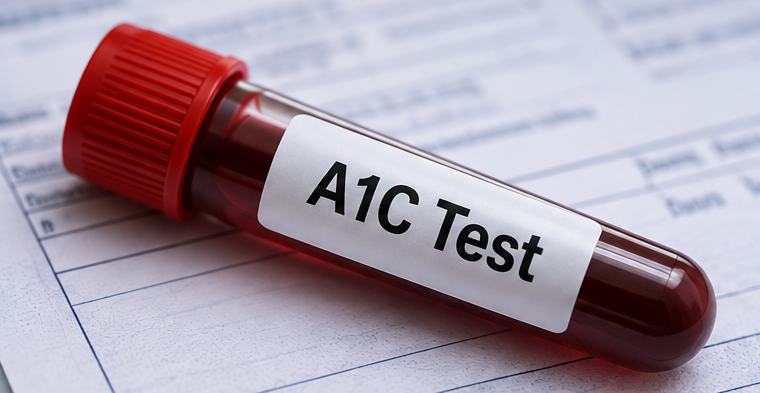
An A1C result arrives as a single percentage, often with no explanation beyond “high” or “in range.” For a number that summarizes three months of blood sugar and shapes treatment decisions, it gets surprisingly little context.
People want to know where the line is. At what point does an A1C stop being a number to watch and become a number that is doing harm?
This guide answers “what is a dangerous level of A1C” with the actual thresholds used by clinicians, what each range means for your health, how age changes the target, and what to do when a result comes back high.
Quick answer: There is no single cutoff, but risk rises steadily as A1C climbs. An A1C of 6.5% or higher indicates diabetes. Above 7%, the chance of long-term complications increases. An A1C of 9% or higher is considered poorly controlled and carries high risk, and levels above 10% usually call for prompt treatment changes.
Key Takeaways
- Below 5.7% is normal, 5.7% to 6.4% is prediabetes, and 6.5% or above is diabetes.
- For most adults with diabetes, the goal is an A1C of 7% or less.
- Complication risk rises gradually with each point above target. There is no sudden cliff.
- An A1C of 9% or higher signals poor control and a need to adjust treatment.
- An A1C that is very low can also be risky if it reflects frequent low blood sugar.
What does the A1C test measure?
The A1C test measures the percentage of hemoglobin in red blood cells that has glucose attached to it. Because red blood cells live about three months, the result reflects average blood sugar over that period. It is used to diagnose prediabetes and diabetes and to monitor how well treatment is working.
The National Institute of Diabetes and Digestive and Kidney Diseases explains that glucose attaches to hemoglobin in your blood cells, and the A1C test reflects how much has attached over the past three months.
That makes A1C different from a fingerstick or a fasting glucose test. Those capture a single moment. A1C smooths out daily swings and shows the overall trend.
It requires no fasting and can be drawn at any time of day.
What do A1C levels mean, from 5.7 to above 9?
An A1C below 5.7% is normal. An A1C of 5.7% to 6.4% indicates prediabetes, meaning blood sugar is elevated but not yet in the diabetes range. An A1C of 6.5% or higher on two tests indicates diabetes. Each additional point above that corresponds to a higher average blood sugar.
These diagnostic ranges are published by the CDC and used throughout the United States.
A1C can be translated into estimated average glucose, the unit shown on a home meter:
A1C | Estimated average glucose | What it generally means |
|---|---|---|
Below 5.7% | Below about 117 mg/dL | Normal |
5.7% to 6.4% | About 117 to 137 mg/dL | Prediabetes |
6.5% | About 140 mg/dL | Diabetes threshold |
7% | 154 mg/dL | Common treatment goal |
8% | 183 mg/dL | Above goal for most adults |
9% | 212 mg/dL | Poorly controlled |
10% | 240 mg/dL | High risk, treatment change needed |
12% | 298 mg/dL | Very high risk |
An A1C of 5.7% deserves a note, since it is where many people first see a flag. It is the lowest value in the prediabetes range. It is not diabetes, and it is not an emergency. It is an early signal that the body is handling glucose less efficiently, and it is the point where changes in eating, activity, and weight are most effective.
What is a dangerous level of A1C?
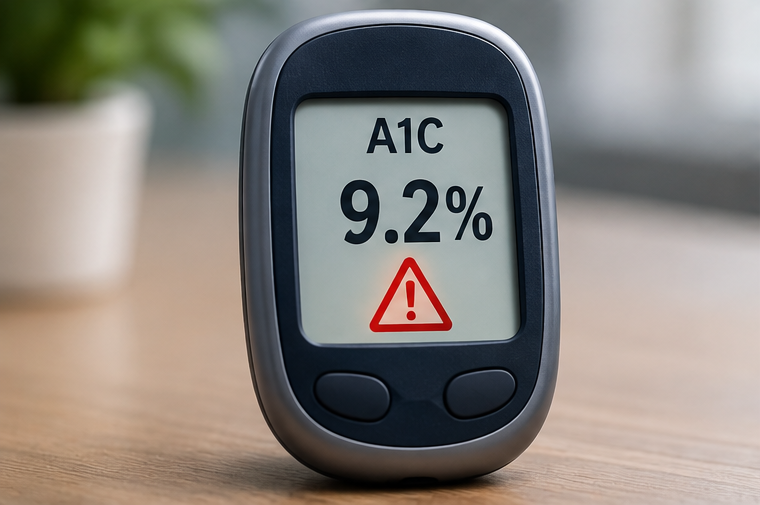
An A1C becomes increasingly dangerous the further it rises above 7%. Levels of 9% or higher are widely treated as poorly controlled diabetes, with substantially higher risk of eye, kidney, nerve, and heart damage. Above 10%, average glucose exceeds 240 mg/dL, symptoms are common, and treatment usually needs to be intensified quickly.
It helps to think in terms of zones instead of a single line:
- 7% to 8%: above goal for most adults. Risk of complications begins to rise. Treatment is usually reviewed.
- 8% to 9%: clearly elevated. Sustained levels here accelerate damage to small blood vessels.
- 9% to 10%: poorly controlled. Health systems use an A1C above 9% as a marker of inadequate control.
- Above 10%: high risk. Thirst, frequent urination, blurred vision, fatigue, and weight loss are common, and clinicians often consider starting or adding insulin.
Schedule Your Primary Care Visit Today!
If you’re due for a checkup or need trusted medical care, we’re here to help. Call (305) 274-8779 or book your appointment online today with Tricord Medical in Miami.
What is a good A1C for a diabetic?
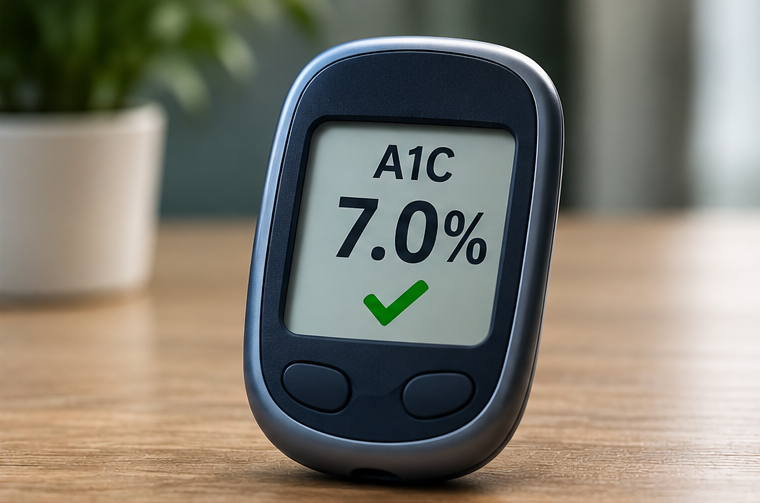
A good A1C for most adults with diabetes is 7% or less. This target lowers the risk of complications while limiting the danger of low blood sugar. Goals are individualized. Some people benefit from a tighter target, and others, particularly older adults with several health conditions, are safer with a higher one.
The American Diabetes Association states that for most people living with diabetes, an A1C of 7% or less is the recommended target, and that individual targets should reflect personal needs and goals.
The NIDDK notes that less strict control, with an A1C between 7% and 8% or even higher, may be appropriate for people with limited life expectancy, a history of severe low blood sugar, or advanced complications.
Lower is not always better. An A1C pushed very low with insulin or certain oral medications can mean frequent hypoglycemia, which causes shakiness, confusion, falls, and in severe cases loss of consciousness. A result of 6% achieved with repeated lows is not a success.
Does a normal A1C change by age?
The diagnostic ranges for A1C are the same for all adults regardless of age: below 5.7% is normal and 6.5% or higher indicates diabetes. A1C tends to rise slightly with age, and treatment goals are often relaxed for older adults to reduce the risk of low blood sugar.
Searches for “normal A1C by age” usually reflect a reasonable instinct, which is that a 78-year-old and a 38-year-old may not need the same target. That is correct for treatment goals, though not for diagnosis.
How goals commonly differ:
- Younger and healthy adults: 7% or less, sometimes lower if achieved safely
- Healthy older adults: around 7% to 7.5%
- Older adults with multiple chronic conditions or frailty: up to about 8%
- People with very limited life expectancy: focus shifts to avoiding symptoms and low blood sugar
The reasoning is practical. The benefits of tight control take years to appear, while the harms of hypoglycemia, such as falls and fractures, are immediate.
Can an A1C result be inaccurate?
An A1C result can be inaccurate when something affects red blood cells or hemoglobin. Iron deficiency anemia, recent blood loss or transfusion, kidney failure, liver disease, pregnancy, and inherited hemoglobin variants can all push the result falsely high or low. In these situations, other tests are used.
The NIDDK lists these conditions and notes that hemoglobin variants are more common in people of African, Mediterranean, or Southeast Asian descent.
Clues that an A1C may not reflect reality:
- Home glucose readings that do not match the lab result
- A known anemia or blood disorder
- A recent transfusion or significant bleeding
- Advanced kidney disease
When A1C is unreliable, clinicians rely on fasting glucose, glucose tolerance testing, continuous glucose monitoring, or alternative blood markers.
What should you do if your A1C is high?
If your A1C is high, schedule a visit to review it instead of waiting for the next routine test. Treatment options include changes to eating and activity, starting or adjusting medication, and checking for complications. A1C responds within about three months, so improvement can be measured at the next test.
Steps that lower A1C:
- Review medications. Doses may need adjusting, or a medication may need to be added or changed.
- Look at eating patterns. Reducing refined carbohydrates and sugary drinks has the fastest effect.
- Add regular activity. Walking after meals lowers post-meal glucose.
- Check your own numbers. Home testing or a continuous monitor shows when glucose runs highest.
- Address sleep and stress. Both raise blood sugar. Our guide to insulin resistance signs and symptoms explains the earlier stage of the process.
How often to test: the CDC advises people with diabetes to have an A1C at least twice a year, and people with prediabetes to repeat it every one to two years. Testing every three months is common while treatment is being adjusted.
Tricord Medical Group offers A1C testing through in-office blood tests and lab work and provides ongoing diabetes care and management in Miami, including medication review and screening for complications.

Final Thoughts
A1C does not have one dangerous number. It has a slope. The further above 7% it sits, and the longer it stays there, the greater the cumulative damage to eyes, kidneys, nerves, and the heart. By 9% the risk is high, and above 10% treatment should change without delay.
The encouraging part is how responsive the number is. Three months of better control shows up directly in the next result, and every point of improvement lowers risk.
If your A1C is above your goal, or you have not been tested recently, contact Tricord Medical Group in Miami at (305) 274-8779 or schedule an appointment online.
Frequently Asked Questions
Is an A1C of 5.7 bad?
An A1C of 5.7% is the lowest value in the prediabetes range. It is not diabetes and does not require medication in most cases. It indicates a higher chance of developing type 2 diabetes over time, and it is the stage where weight loss, regular activity, and dietary changes are most effective.
How quickly can you lower your A1C?
A1C reflects roughly the previous three months, so meaningful change takes about that long to appear in a test. With consistent treatment and lifestyle changes, many people see a drop of one point or more within three to six months. Very high starting levels often fall fastest.
Can a high A1C be reversed?
A high A1C can be lowered, and in prediabetes it can often be returned to the normal range. In type 2 diabetes, some people reach non-diabetic levels through weight loss and sustained changes, although the tendency remains. Damage already done to eyes, kidneys, or nerves may not fully reverse.
What are the symptoms of a very high A1C?
A very high A1C often comes with increased thirst, frequent urination, fatigue, blurred vision, slow-healing cuts, recurrent infections, and unintended weight loss. Some people have few symptoms despite high levels, which is why testing matters. Nausea, vomiting, or confusion with high glucose requires emergency care.
How often should A1C be checked?
People with diabetes should have an A1C at least twice a year, and every three months if treatment is changing or goals are not being met. People with prediabetes are usually retested every one to two years. Adults with normal results are retested based on age and risk factors.
Why Preventative Primary Care in Miami Matters
Preventative primary care helps you stay ahead of illness with regular checkups and early detection.
Book an Appointment
Schedule an appointment with our trusted Miami primary care doctors