




Few things derail a day faster than sudden nausea, vomiting, and diarrhea. When it hits, one of the first questions people ask is whether they picked up a stomach bug or ate something that didn’t agree with them. The symptoms can look almost identical, which makes the cause genuinely hard to pin down in the moment.
Understanding the difference can help you respond the right way, know what to expect, and recognize when the situation calls for medical care rather than rest and fluids.
This article breaks down what separates a stomach bug from food poisoning, where norovirus and the flu fit in, how to care for yourself at home, and when it’s time to be seen.
Understanding Food Poisoning vs a Stomach Bug
The food poisoning vs stomach bug question is so common because both conditions attack the digestive system and produce overlapping symptoms. Both can cause nausea, vomiting, diarrhea, stomach cramps, and a low-grade fever, and both tend to come on suddenly.
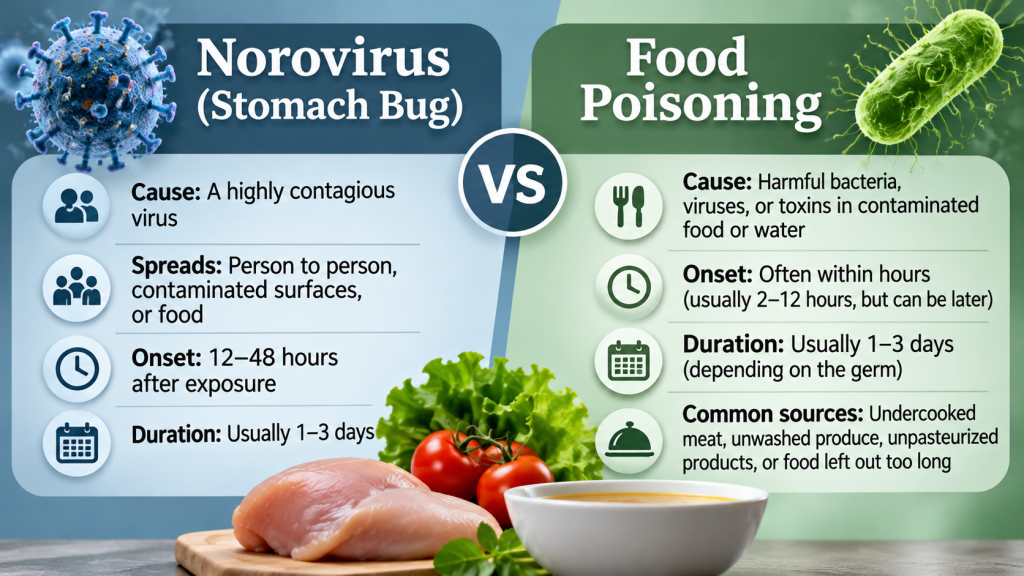
The core difference lies in the cause. A stomach bug, known medically as viral gastroenteritis, is an infection usually spread from person to person. Food poisoning, also called a foodborne illness, comes from eating food or drinking water contaminated with harmful germs or their toxins.
In other words, the symptoms may feel the same while the source is different. That distinction shapes how the illness spreads and, sometimes, how long it lasts.
What a Stomach Bug Is and How It Spreads
A stomach bug is caused by viruses such as norovirus or rotavirus that inflame the stomach and intestines. Despite the nickname “stomach flu,” it has nothing to do with influenza.
These viruses spread easily. You can catch one by close contact with someone who’s sick, touching contaminated surfaces, or sharing food and utensils. This is why a stomach bug often moves through families, workplaces, and schools, with several people falling ill within a day or two of each other.
Symptoms usually appear 12 to 48 hours after exposure and tend to include watery diarrhea, vomiting, cramping, and sometimes body aches and a mild fever. Most cases improve within one to three days.
What Food Poisoning Is and How It Happens
Sorting out whether you have food poisoning or a gastro bug isn’t always possible from symptoms alone, but a few patterns can point you in the right direction. These clues help, but they aren’t foolproof. Reassuringly, the home care for both is largely the same, so you don’t need a definitive answer to start feeling better.
- Timing: Food poisoning often strikes within hours of a specific meal, while a stomach bug usually appears a day or two after contact with someone sick.
- Who else is affected: If everyone who shared a particular dish gets sick, food poisoning is more likely. If illness spreads one person at a time through a household, a contagious stomach bug is more likely.
- Recent exposures: Travel, a restaurant meal, or food that sat out can hint at food poisoning, while a sick coworker or family member suggests a virus.

Schedule Your Primary Care Visit Today!
If you’re due for a checkup or need trusted medical care, we’re here to help. Call (305) 274-8779 or book your appointment online today with Tricord Medical in Miami.
Norovirus vs Food Poisoning
The norovirus vs food poisoning comparison is where the line blurs the most. Norovirus is the classic stomach bug, spread from person to person, yet it’s also one of the most common causes of foodborne illness when it contaminates food or water.
That overlap means norovirus can technically be both a stomach bug and a form of food poisoning, depending on how you were exposed. Someone handling food while sick can pass norovirus to anyone who eats it, blurring the usual distinction.
The practical takeaway is that the exact label matters less than recognizing the symptoms, staying hydrated, and limiting the spread to others through careful handwashing.
Puking From the Flu and Why It Gets Confused
Puking from the flu is another source of confusion, partly because of the misleading term “stomach flu.” The actual flu, influenza, is mainly a respiratory illness, but it can sometimes cause nausea and vomiting, especially alongside fever, body aches, and fatigue.
When vomiting comes with a sore throat, cough, congestion, and high fever, influenza is more likely than a simple stomach bug or food poisoning. When the main symptoms are vomiting and diarrhea without respiratory complaints, a stomach bug or foodborne illness is the more probable cause.
Because these illnesses can look similar early on, watching how symptoms develop over the first day or two often reveals which one you’re dealing with.
Caring for Vomiting and Diarrhea at Home
For most healthy adults, both a stomach bug and food poisoning can be managed at home with rest and careful attention to hydration. Losing fluids through vomiting and diarrhea is the main risk, so replacing them is the priority.
Helpful steps include:
- Sipping small amounts of water or an oral rehydration solution frequently rather than drinking large amounts at once
- Easing back into bland, simple foods such as crackers, rice, toast, or bananas once vomiting settles
- Resting as much as possible while your body recovers
- Avoiding alcohol, caffeine, and very greasy or spicy foods until you feel better
- Washing your hands often to avoid spreading a contagious bug to others
Most people start to improve within a couple of days. If symptoms drag on or worsen, that’s a signal to seek care.

When Symptoms Need Medical Attention
While most cases clear up on their own, some situations call for prompt evaluation. Contact a medical provider or seek urgent care if you experience:
- Signs of dehydration such as dizziness, very little urination, dark urine, or extreme thirst
- An inability to keep any fluids down for more than a day
- Blood in your vomit or stool
- A high fever
- Severe abdominal pain
- Symptoms that last longer than two to three days
Older adults, pregnant women, young children, and people with weakened immune systems or chronic conditions should be especially cautious, since dehydration and complications can develop more quickly in these groups.
When in doubt, it’s better to be checked than to wait, particularly if you can’t stay hydrated.
Final Thoughts
A stomach bug and food poisoning can feel nearly identical, and the food poisoning vs stomach bug question doesn’t always have a clear answer in the moment. The differences come down to the source, the timing, and who else around you is sick, while norovirus and the flu can muddy the picture further.
The reassuring part is that most cases of vomiting and diarrhea improve within a few days with rest and steady hydration, regardless of the exact cause. What matters most is recognizing when symptoms cross the line into something that needs medical attention.
If your symptoms are severe, lasting, or leaving you unable to stay hydrated, schedule an appointment with the Tricord Medical Group primary care office in Miami for an evaluation and guidance on the right next steps.
Frequently Asked Questions
Are my symptoms from a stomach bug or food poisoning?
It can be hard to tell, since both cause nausea, vomiting, and diarrhea. Food poisoning often starts within hours of a specific meal and may affect everyone who ate the same food, while a stomach bug usually appears a day or two after contact with someone sick and tends to spread person to person. A provider can help clarify the cause if symptoms are severe or persistent.
How long does a stomach bug or food poisoning usually last?
Most cases improve within one to three days. Some types of food poisoning resolve even faster, while others linger a bit longer. Symptoms that last beyond two to three days deserve medical evaluation.
Is norovirus the same as food poisoning?
- Not exactly. Norovirus is the most common cause of viral gastroenteritis, but it can also cause foodborne illness when it contaminates food or water. That’s why the line between norovirus and food poisoning can blur.
Can the flu cause vomiting?
Yes. Although influenza is mainly a respiratory illness, it can sometimes cause nausea and vomiting, especially with fever and body aches. Vomiting paired with cough, congestion, and sore throat points more toward the flu than a stomach bug.
When should I see a doctor for vomiting and diarrhea?
Seek care if you can’t keep fluids down, show signs of dehydration, notice blood in your stool or vomit, have a high fever or severe pain, or have symptoms lasting more than a few days. The Tricord Medical Group primary care office in Miami can evaluate your symptoms and recommend the right treatment.
Why Preventative Primary Care in Miami Matters
Preventative primary care helps you stay ahead of illness with regular checkups and early detection.
Book an Appointment
Schedule an appointment with our trusted Miami primary care doctors