




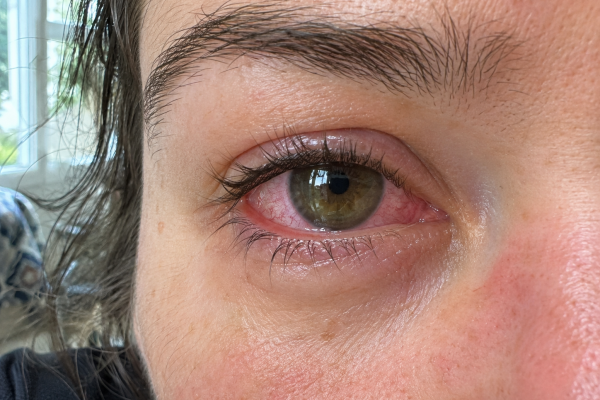
You wake up with red, watery, irritated eyes. The first worry is usually pink eye, followed quickly by practical ones: whether you can go to work, whether the kids will catch it, and whether you need drops.
Red eyes have several causes, and two of the most common look alike at a glance. Infectious pink eye spreads easily from person to person. Eye allergies do not spread at all. Treating one as the other wastes time and, in the case of infection, can pass it along.
This guide explains pink eye vs allergies using the clues that matter most: itching, the type of discharge, whether one or both eyes are involved, and what other symptoms came with it.
Quick answer: Infectious pink eye usually starts in one eye, causes a gritty or burning feeling, and produces watery or thick discharge, often alongside a cold. Eye allergies affect both eyes at once, cause intense itching with clear watery tearing, and come with sneezing or a runny nose. Infectious pink eye is contagious, and allergies are not.
Key Takeaways
- Intense itching in both eyes points strongly to allergies.
- Thick yellow or green discharge that sticks the eyelids together suggests a bacterial infection.
- Viral pink eye typically begins in one eye and often follows a cold or sore throat.
- Viral and bacterial pink eye are very contagious, while allergic conjunctivitis is not.
- Eye pain, light sensitivity, or blurred vision that does not clear with blinking needs prompt medical attention.
What is the difference between pink eye and allergies?
Pink eye, or conjunctivitis, is inflammation of the thin membrane covering the white of the eye and inner eyelids. It can be caused by a virus, bacteria, or an allergic reaction. When people contrast pink eye with allergies, they usually mean infectious conjunctivitis from a germ versus allergic conjunctivitis triggered by pollen, dust, or pet dander.
The CDC lists viruses, bacteria, and allergens as the three main causes of pink eye. So allergic conjunctivitis is technically a form of pink eye. The distinction that matters in daily life is whether the cause is contagious.
Viral pink eye
- Main sensation: gritty, burning
- Discharge: watery
- Eyes affected: often one, then both
- Other symptoms: cold, sore throat
- Contagious: yes
- Typical course: 7 to 10 days
- Usual treatment: supportive care
Bacterial pink eye
- Main sensation: sore, irritated
- Discharge: thick, yellow or green
- Eyes affected: one or both
- Other symptoms: sometimes an ear infection
- Contagious: yes
- Typical course: days to 2 weeks
- Usual treatment: sometimes antibiotic drops
Eye allergies
- Main sensation: intense itching
- Discharge: clear and watery, sometimes stringy
- Eyes affected: both at the same time
- Other symptoms: sneezing, itchy nose
- Contagious: no
- Typical course: as long as exposure continues
- Usual treatment: antihistamine drops, avoiding triggers
How can you tell whether red eyes are an infection or allergies?
Four clues separate infection from allergies. Itching is the dominant symptom with allergies and mild with infection. Allergies affect both eyes together, while infection often starts in one. Allergic discharge is clear and watery, while bacterial discharge is thick and colored. Allergies accompany sneezing, and viral infection accompanies a cold.
The CDC’s description of symptoms by type follows the same pattern. Viral pink eye usually has watery discharge and often occurs with a respiratory illness. Bacterial pink eye produces thicker pus that can seal the eyelids. Allergic conjunctivitis involves both eyes with intense itching and other allergy symptoms.
Questions worth asking yourself:
- Do I mostly want to rub my eyes? Strong itching suggests allergies.
- Did it start in one eye? That favors infection.
- Are my lids stuck together in the morning? Sticky, colored discharge favors bacteria.
- Have I had a cold this week, or been near someone with pink eye? That favors a virus.
- Does this happen at the same time every year, or around a pet? That favors allergies.
No single clue is definitive. Mild viral cases can itch, and allergies can occasionally seem worse in one eye. The overall picture is what counts.
What is allergic conjunctivitis?
Allergic conjunctivitis is eye inflammation caused by an immune reaction to an allergen such as pollen, mold, dust mites, or pet dander. It causes itching, redness, burning, and clear watery discharge in both eyes. It is not an infection, cannot spread to other people, and tends to recur with each exposure.
The American College of Allergy, Asthma and Immunology lists itching, redness, burning, and clear, watery discharge as the hallmark symptoms. Swollen, puffy eyelids are also common.
Triggers fall into three groups:
- Outdoor allergens: grass, tree, and weed pollens
- Indoor allergens: pet dander, dust mites, and mold
- Irritants: cigarette smoke, perfume, and exhaust
South Florida’s climate shapes the pattern. Warm temperatures and humidity support mold and dust mites all year, and something is in bloom in most months. Many Miami residents have eye allergy symptoms that do not follow the spring-only schedule seen farther north.
Schedule Your Primary Care Visit Today!
If you’re due for a checkup or need trusted medical care, we’re here to help. Call (305) 274-8779 or book your appointment online today with Tricord Medical in Miami.
Is pink eye contagious?
Viral and bacterial pink eye are very contagious. They spread through direct contact with eye discharge, contaminated hands, and shared items such as towels, pillowcases, and makeup. Allergic conjunctivitis is not contagious. A person with infectious pink eye can spread it for as long as the eye is red and producing discharge.
Viral pink eye is the most common infectious form. According to the National Eye Institute, pink eye often gets better on its own after 7 to 10 days.
To avoid spreading it:
- Wash hands often and avoid touching or rubbing the eyes
- Use a separate towel and washcloth, and change pillowcases daily
- Do not share eye drops, makeup, or contact lens supplies
- Discard eye makeup used while infected
- Clean glasses, phones, and other items that touch the face
Many workplaces and schools ask people to stay home while discharge is active. If your job involves close contact with others, ask your clinician when it is reasonable to return.

How are pink eye and eye allergies treated?
Treatment depends on the cause. Viral pink eye is managed with cool compresses and lubricating drops while it resolves. Bacterial pink eye may be treated with antibiotic drops or ointment. Eye allergies are treated with antihistamine eye drops, artificial tears, cold compresses, and reducing contact with the trigger.
Viral pink eye. Antibiotics do not work against viruses. Artificial tears and cool compresses ease discomfort while the infection clears, usually within one to two weeks.
Bacterial pink eye. Mild cases often improve without treatment. A clinician may prescribe antibiotic drops to shorten the illness and reduce spread, particularly when discharge is heavy.
Eye allergies. The ACAAI describes several options:
- Artificial tears to rinse allergens from the eye
- Antihistamine and mast cell stabilizer drops for itching
- Oral antihistamines, which help but may dry the eyes
- Cold compresses for swelling
A caution about redness-relief drops: decongestant eye drops should be limited to two or three days, because longer use can cause rebound redness.
Steroid eye drops should be used only when prescribed and monitored, since they can worsen certain infections and raise eye pressure.
Contact lens wearers should stop wearing lenses at the first sign of a red eye and switch to glasses until symptoms resolve.
When should you see a doctor for a red eye?
See a doctor promptly for eye pain, sensitivity to light, blurred vision that does not improve after wiping away discharge, or intense redness. Also seek care if symptoms worsen or fail to improve after several days, if you wear contact lenses, or if you have a weakened immune system.
These symptoms can signal conditions more serious than conjunctivitis, including infection of the cornea or inflammation inside the eye. Contact lens wearers are at particular risk for corneal infection, which can threaten vision if treatment is delayed.
A newborn with red eyes or discharge needs immediate medical evaluation.
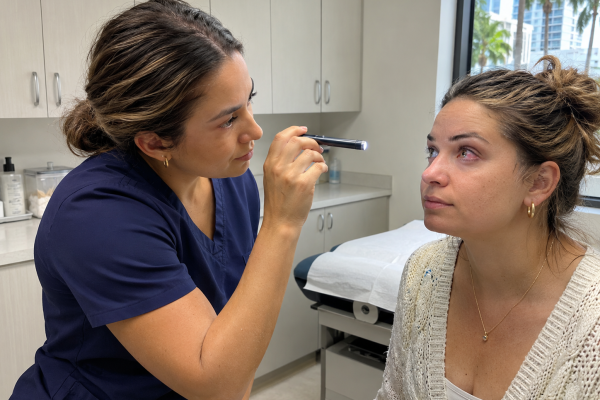
Most red eyes can be assessed in a primary care office. A clinician can examine the eye, check vision, look for signs that separate infection from allergy, and refer to an eye specialist when warning signs are present. Tricord Medical Group’s acute care services in Miami include same-day visits for sudden symptoms like these.
Final Thoughts
Itching is the clearest dividing line. Eyes that itch intensely, both at once, with sneezing and clear tears, are almost always allergic. An eye that feels gritty, started on one side, and came with a cold or sticky discharge is more likely infected, and contagious.
Most cases of either kind are mild and settle with simple care. The exceptions announce themselves with pain, light sensitivity, or changes in vision, and those should be seen quickly.
If you are unsure what is causing your symptoms, or they are not improving, contact Tricord Medical Group in Miami at (305) 274-8779 or schedule an appointment online.
Frequently Asked Questions
Can allergies turn into pink eye?
Allergies do not turn into infectious pink eye, since one is an immune reaction and the other is caused by a germ. Frequent rubbing of itchy eyes can transfer bacteria or viruses from the hands, which may lead to a separate infection developing on top of the existing allergy.
How long does pink eye last?
Viral pink eye usually lasts 7 to 14 days and occasionally up to three weeks. Mild bacterial pink eye often improves within 2 to 5 days and may take up to two weeks to clear completely. Allergic conjunctivitis lasts for as long as exposure to the allergen continues.
Can you go to work with pink eye?
You can usually work with allergic conjunctivitis because it is not contagious. With viral or bacterial pink eye, staying home is advisable while the eye is producing discharge, especially in jobs involving close contact, food handling, healthcare, or childcare. Employers and schools may have their own return policies.
Do antihistamine eye drops help with infectious pink eye?
Antihistamine eye drops do not treat infectious pink eye, because they block the allergic response and have no effect on viruses or bacteria. They may slightly reduce itching. If antihistamine drops bring no improvement within a day or two, allergies are less likely to be the cause.
Is it safe to wear contact lenses with red eyes?
It is not safe to wear contact lenses while your eyes are red or irritated. Lenses can trap germs and allergens against the eye and increase the risk of a corneal infection. Switch to glasses until symptoms are fully gone, and replace the lenses and case used before symptoms began.
Why Preventative Primary Care in Miami Matters
Preventative primary care helps you stay ahead of illness with regular checkups and early detection.
Book an Appointment
Schedule an appointment with our trusted Miami primary care doctors