



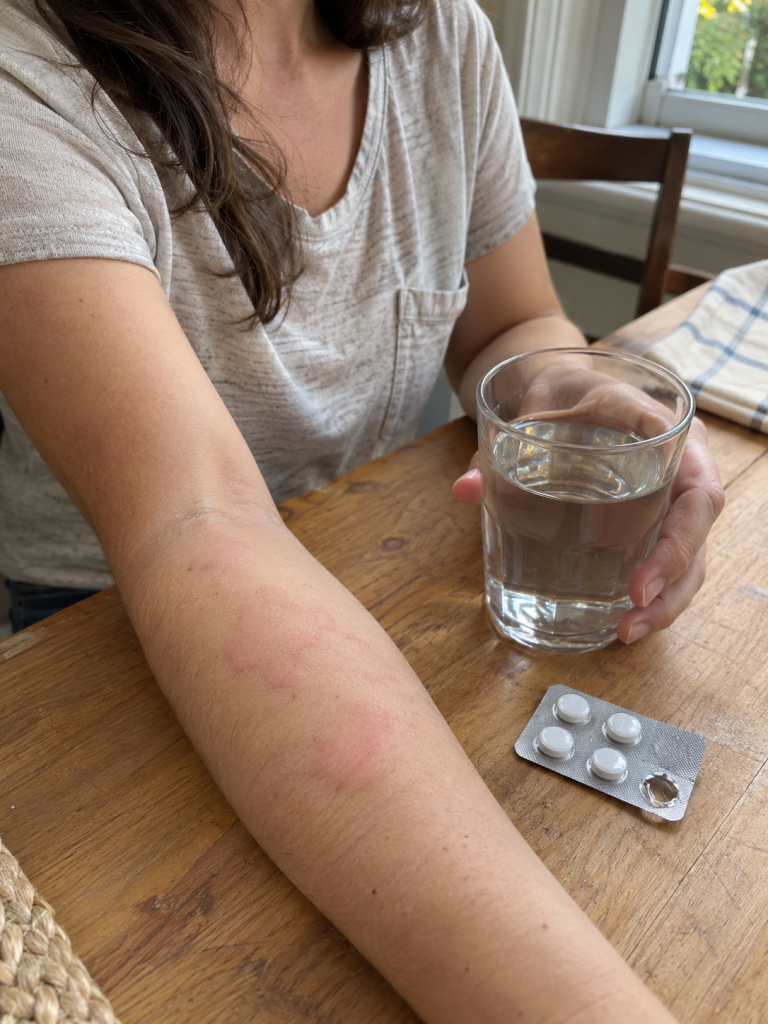
Hives tend to arrive without warning. They itch, they swell, and they often seem to migrate from one part of the body to another within hours. Because the rash looks so active, many people assume it must be catching and worry about passing it to family members or picking it up from someone else.
The reassuring reality is that hives are almost never contagious. The welts are your skin reacting to something happening on the inside, not an infection that travels from person to person. Major medical groups, including the American Academy of Dermatology (AAD) and the American Academy of Allergy, Asthma & Immunology (AAAAI), agree that you cannot catch hives from another person.
This article explains what hives are, why they can look like they’re spreading, the one situation where the cause behind them may be contagious, and when it makes sense to have a Miami clinician take a closer look.
Understanding Hives
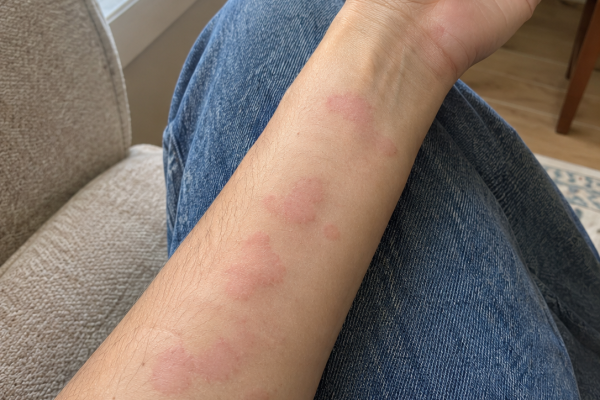
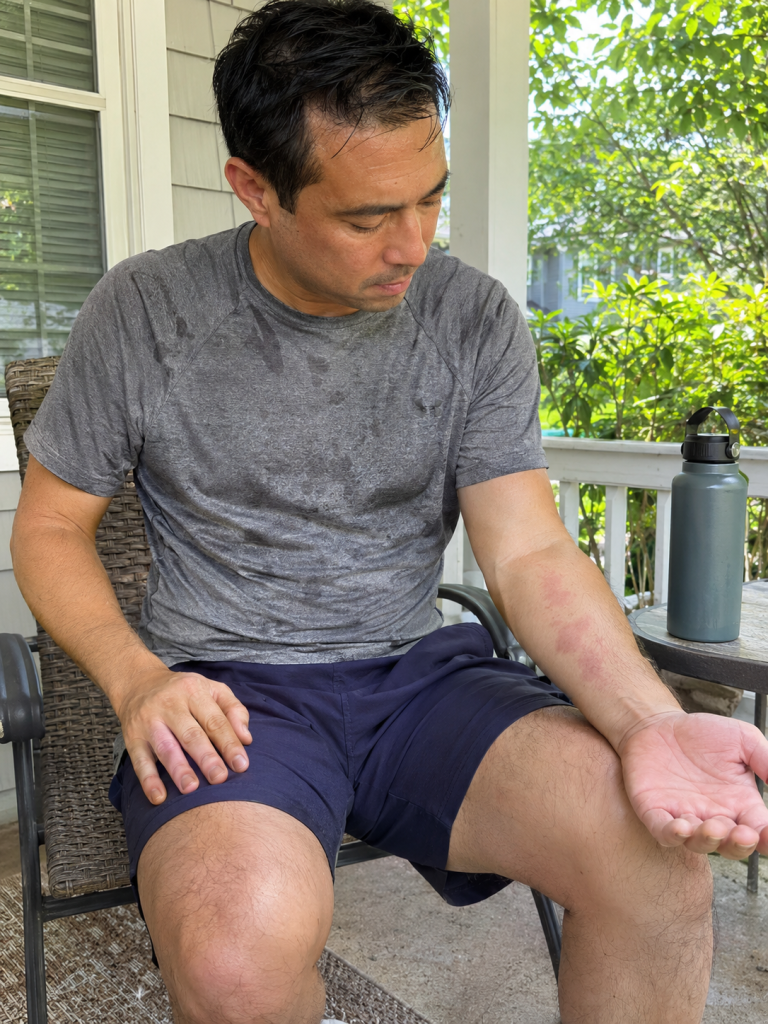
Hives, known medically as urticaria, are raised, itchy welts that can be as small as a pencil eraser or large enough to cover much of a limb. They form when certain cells in the skin release histamine and other chemicals, prompting fluid to leak from tiny blood vessels and collect just beneath the surface. The result is the swollen, often pink or skin-colored bumps people recognize as hives.
The welts can appear anywhere on the body and frequently change shape, size, and location over the course of a day. That restless quality is part of what makes hives so unsettling, even though it’s a normal feature of the condition rather than a sign that something is spreading.
Because the entire reaction takes place inside your own body, there is nothing for another person to catch.
Hives Are Usually Not Contagious
In the overwhelming majority of cases, hives are not contagious. You cannot give them to a partner through a hug, to a child by holding them, or to a roommate by sharing a couch or a meal. The rash is a signal of how the immune system is behaving, not a germ living on the surface of the skin.
This is one of the most important things for patients to understand, because hives can look far more alarming than they are. The welts may show up in clusters, swell quickly, fade, and reappear elsewhere, which often gives the impression of something contagious at work. In reality, that pattern reflects ongoing histamine release, not transmission from one person to another.
A person with hives may still need care, but usually for symptom relief, trigger identification, or to rule out a more serious allergic reaction. Isolation from other people is rarely necessary.
How Urticaria Can Spread Across the Body
A common source of confusion is the way urticaria can spread across a single person’s skin. A welt may disappear from the forearm and a fresh cluster may surface on the back, chest, or legs within the same few hours. Hives are well known for this shifting, traveling pattern.
It helps to separate two very different ideas. Urticaria can spread in the sense of covering more skin over time, because the immune system keeps releasing histamine in new areas. It does not spread in the sense of moving to another person.
So when someone says their hives are spreading, both things can be true and false at once. The rash may genuinely be covering more of the body. It still cannot transfer to anyone nearby.
Why Urticaria Is Not Communicable
As a skin condition, urticaria is not communicable. It is a reaction pattern driven by histamine, not a rash that passes from one person’s skin to another. The welts themselves carry no infectious risk.
The nuance is that the trigger behind hives is sometimes contagious. Common infections such as the cold, strep throat, and COVID-19 can prompt the immune system to overreact and produce welts. In that situation, the underlying illness may spread the usual ways, while the hives remain a personal reaction that cannot be passed along.
This explains a scenario many families recognize. Two people in the same household get sick around the same time, and one or both break out in hives. It can look as though the rash traveled between them, but what actually spread was the infection. Each immune system then responded on its own, and one of those responses happened to include urticaria.
The practical takeaway is simple. If hives appear during an illness, take normal precautions for the illness itself. There’s no need to stay away from loved ones because of the welts.
Schedule Your Primary Care Visit Today!
If you’re due for a checkup or need trusted medical care, we’re here to help. Call (305) 274-8779 or book your appointment online today with Tricord Medical in Miami.
Hives Are Not Spreadable Through Everyday Contact
Patients often want to know whether hives are spreadable through ordinary daily contact, usually because they’re trying to keep the rest of the household safe. In typical cases, the answer is no.
Hives are not spreadable by touching the welts, sharing towels or bed sheets, using the same bathroom, or sitting close to someone. There’s no organism on the skin’s surface for another person to pick up, so even close contact poses no risk of catching the rash.
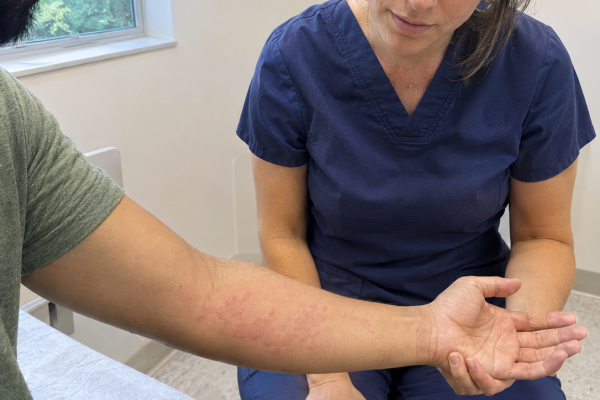
The one thing worth confirming is that the rash is actually hives. Not every itchy, bumpy rash is urticaria, and a few skin conditions that resemble it can be contagious.
Signs That Call for Emergency Care
Call 911 or go to the nearest emergency room right away if hives appear alongside any of the following:
- Swelling of the lips, tongue, mouth, or throat
- Trouble breathing, wheezing, or chest tightness
- Difficulty swallowing
- Dizziness, faintness, or a racing heartbeat
These can be signs of anaphylaxis, a life-threatening reaction in which throat swelling may block the airway. When breathing or swallowing is affected, it’s never something to wait out.
Common Triggers Behind Hives
Pinpointing the cause of hives can be straightforward or surprisingly difficult. Sometimes a trigger is obvious, such as a new medication or a recent insect sting. Other times, no clear culprit ever turns up.
Frequent triggers include:
- Foods such as nuts, shellfish, eggs, and milk
- Medications, including some antibiotics and pain relievers
- Insect bites and stings
- Allergens such as pollen, pet dander, and latex
- Infections, including colds, strep, and other viruses
- Physical factors such as heat, cold, sweating, exercise, and sun exposure
- Pressure on the skin, including tight clothing and scratching
- Emotional stress
When no specific trigger can be identified, the condition is often called chronic spontaneous urticaria. That label can feel frustrating, but it’s common, and it shifts the focus toward calming the immune reaction rather than chasing an allergen that may not exist.
Final Thoughts
The bottom line is reassuring. Hives are not contagious, urticaria is not communicable from person to person, and hives are not spreadable through touch, towels, or close contact. Most of the worry comes from the fact that the welts can spread across your own body, and occasionally the infection that triggered them is contagious even though the hives themselves never are.
If you’re dealing with a new rash, repeated flare-ups, or swelling you suspect might be hives, the most useful next step is an accurate diagnosis. A proper evaluation can confirm whether it’s truly urticaria, help identify a trigger, and determine whether treatment is needed now.
To get clear answers and a care plan built around your situation, schedule an appointment with the Tricord Medical Group primary care office in Miami.
Frequently Asked Questions
Are hives contagious from skin-to-skin contact?
No. Hives are not passed from one person to another by touching the rash. The welts may move around on the affected person’s own body, but they cannot be transmitted to someone else.
Can urticaria spread across the body?
Yes, on the affected person. Hives often fade in one spot and reappear in another, which is a normal feature of urticaria. It does not mean the rash is spreading to other people.
Is urticaria communicable if it appears during a cold or other infection?
The hives themselves are not communicable. What may be contagious is the underlying illness, such as a cold, strep throat, or COVID-19, that triggered the immune reaction. The welts are a response to the illness, not something passed skin to skin.
Are hives spreadable through towels, sheets, or hugging?
In typical cases, no. Hives are not spreadable through shared towels, bedding, hugs, or household contact, because the rash isn’t a surface infection. If a contagious illness is the trigger, that illness can spread the usual ways, but the hives cannot.
When should I see a doctor for hives?
Seek emergency care immediately if hives come with trouble breathing, swelling of the lips, tongue, mouth, or throat, dizziness, or faintness. Otherwise, schedule a visit if the rash keeps returning, lasts for days, is severe, or you’re unsure whether it’s actually hives. In South Florida, the Tricord Medical Group primary care office in Miami can evaluate suspected hives and guide your next steps.
Why Preventative Primary Care in Miami Matters
Preventative primary care helps you stay ahead of illness with regular checkups and early detection.
Book an Appointment
Schedule an appointment with our trusted Miami primary care doctors