



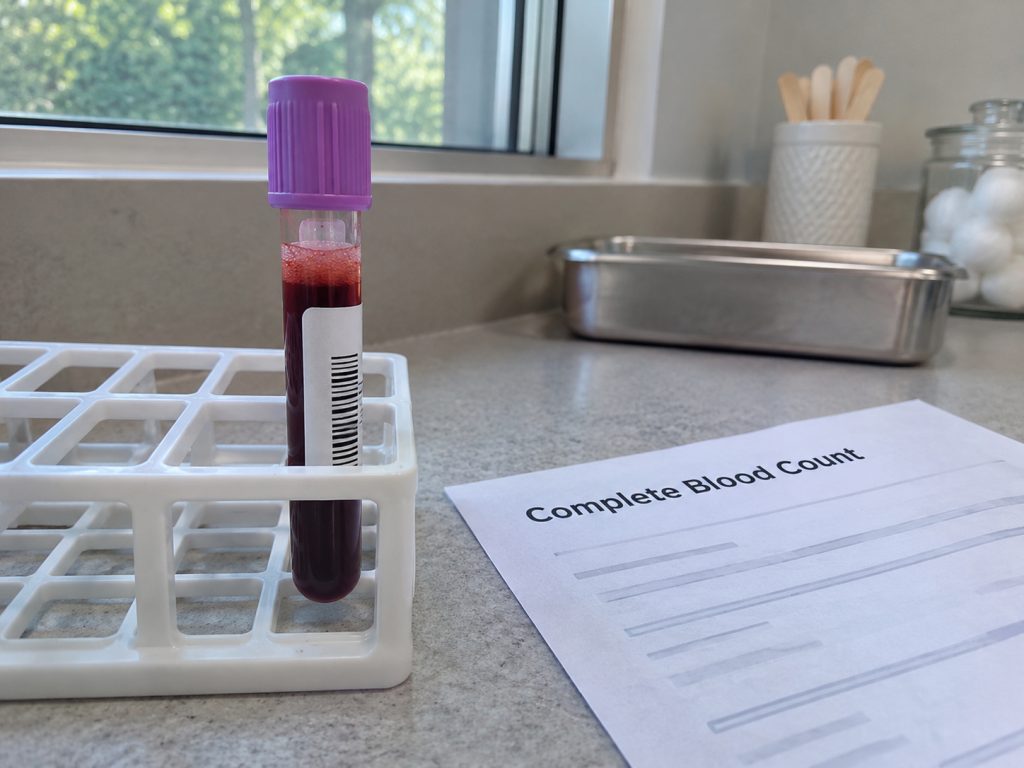
The complete blood count, or CBC, is probably the most commonly ordered blood test in medicine. It shows up on routine physicals, pre-surgery checklists, and almost any workup for fatigue, fever, or bruising.
Because it is so routine, it is rarely explained. Patients receive a page of abbreviations and numbers, a few of them flagged, and are left to work out what it all means.
This guide answers the question “what does CBC test for” in plain language. It covers each part of the test, what counts as a typical result, what high and low values can indicate, and what the test does not look at.
Quick answer: A CBC measures the cells in your blood: red blood cells that carry oxygen, white blood cells that fight infection, and platelets that help blood clot. It also reports hemoglobin, hematocrit, and red cell size. Doctors use it to screen for anemia, infection, inflammation, bleeding problems, and some blood disorders.
Key Takeaways
- A CBC counts three cell types, red cells, white cells, and platelets, and adds several measurements describing them.
- Low hemoglobin or hematocrit points to anemia, the most common abnormality the test finds.
- A high white blood cell count usually reflects infection or inflammation, not cancer.
- No fasting is needed for a CBC alone.
- A CBC does not measure blood sugar, cholesterol, or kidney, liver, and thyroid function.
What is a CBC?
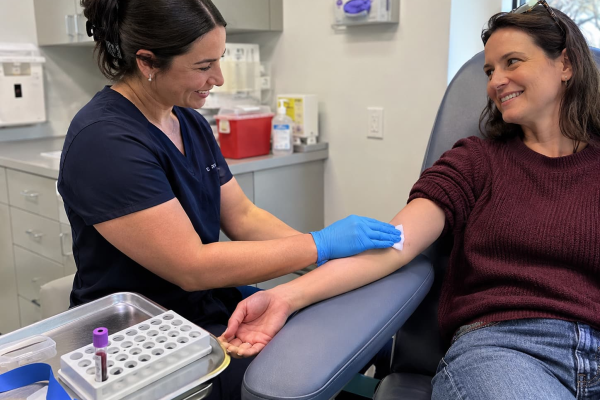
A CBC, or complete blood count, is a group of blood tests that measures the number and size of the different cells in your blood. It is performed on a small sample drawn from a vein in the arm and analyzed by an automated machine. It gives a broad overview of general health.
That definition comes from MedlinePlus, which describes the test as measuring the number and size of blood cells. A CBC is frequently done during routine checkups and to monitor conditions that affect blood counts.
Blood has two main parts. Plasma is the liquid portion that carries nutrients, hormones, and proteins. The cells suspended in it are what a CBC examines.
All three cell types are produced in the bone marrow. Because of that shared origin, a CBC also offers an indirect look at how well the bone marrow is working.
What does a CBC blood test measure?
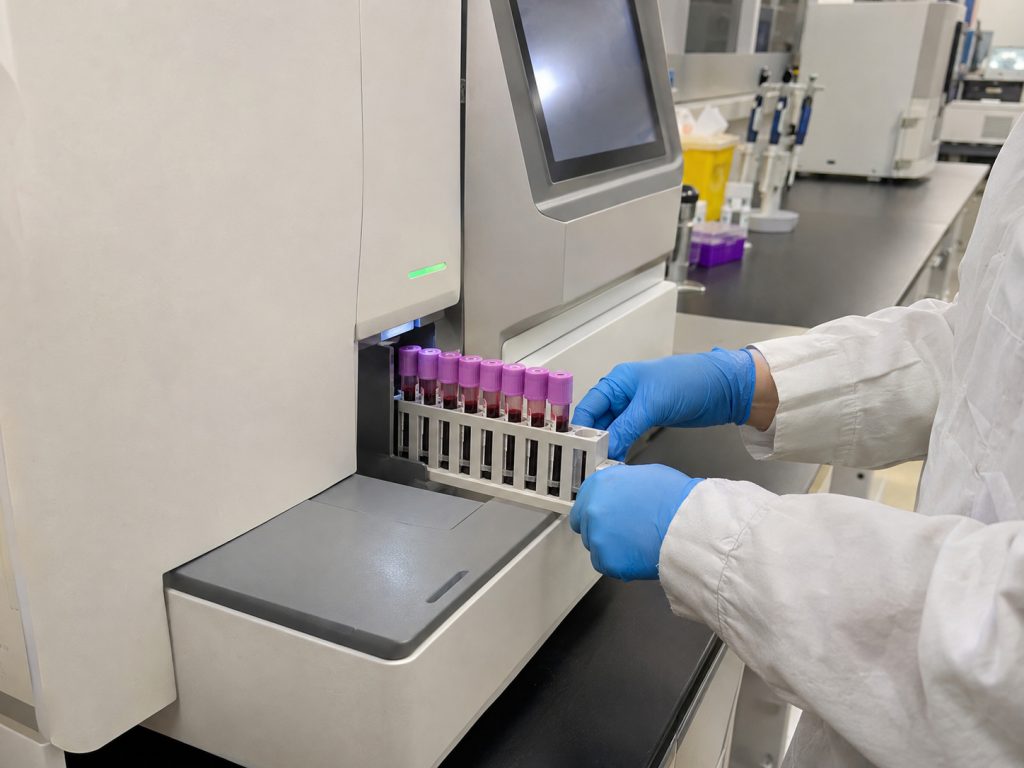
A CBC blood test measures red blood cells, white blood cells, platelets, hemoglobin, and hematocrit. It also reports red cell indices, including mean corpuscular volume, which describes the average size of red cells. A CBC with differential breaks the white blood cell count into its five separate types.
Component | What it tells you | Typical adult range |
|---|---|---|
Red blood cells (RBC) | Number of oxygen-carrying cells | Men 4.35 to 5.65, women 3.92 to 5.13 trillion cells/L |
Hemoglobin (Hgb) | Oxygen-carrying protein in red cells | Men 13.2 to 16.6, women 11.6 to 15 g/dL |
Hematocrit (Hct) | Share of blood made up of red cells | Men 38.3% to 48.6%, women 35.5% to 44.9% |
White blood cells (WBC) | Number of infection-fighting cells | 3.4 to 9.6 billion cells/L |
Platelets (Plt) | Number of clotting cell fragments | Men 135 to 317, women 157 to 371 billion/L |
MCV | Average size of red cells | Varies by lab |
These ranges are the adult reference values published by Mayo Clinic. Every laboratory sets its own ranges, so the values printed on your report are the ones that apply to you. The National Heart, Lung, and Blood Institute adds that normal ranges differ between men and women and can be affected by age and altitude.
Many U.S. lab reports use different units for the same numbers. A white cell count of 3.4 to 9.6 billion cells per liter appears as 3,400 to 9,600 per microliter, and platelets appear as roughly 135,000 to 371,000 per microliter.
The differential. When a “CBC with diff” is ordered, the white cells are sorted into five types:
- Neutrophils: first responders to bacterial infection
- Lymphocytes: key to fighting viruses and to immune memory
- Monocytes: clean up damaged tissue and chronic infection
- Eosinophils: rise with allergies and parasitic infections
- Basophils: involved in allergic responses
What do red blood cell, hemoglobin, and hematocrit results mean?
Red blood cell, hemoglobin, and hematocrit results show how well your blood carries oxygen. Low values indicate anemia, which may come from iron or vitamin deficiency, blood loss, or chronic illness. High values can reflect dehydration, smoking, living at altitude, lung or heart disease, or, rarely, a bone marrow disorder.
These three numbers move together, and anemia is the most frequent finding on a CBC. Symptoms include fatigue, weakness, shortness of breath with exertion, pale skin, and feeling cold.
The MCV helps narrow down the cause:
- Low MCV (small cells): commonly iron deficiency, sometimes an inherited condition such as thalassemia trait.
- Normal MCV: often anemia of chronic disease, kidney disease, or recent blood loss.
- High MCV (large cells): commonly vitamin B12 or folate deficiency, alcohol use, thyroid disease, or certain medications.
A mildly low hemoglobin is common in menstruating women and is frequently due to iron deficiency. In men and in women after menopause, iron deficiency anemia needs an explanation, because it can indicate slow bleeding in the digestive tract.
Dehydration deserves a mention in Miami’s climate. Being low on fluid concentrates the blood and can make red cell values look higher than they truly are.

Schedule Your Primary Care Visit Today!
If you’re due for a checkup or need trusted medical care, we’re here to help. Call (305) 274-8779 or book your appointment online today with Tricord Medical in Miami.
What does a high white blood cell count mean?
A high white blood cell count most often means the body is responding to an infection or inflammation. Other common causes include physical or emotional stress, smoking, corticosteroid medications, and allergic reactions. Blood cancers such as leukemia are a much less common cause and usually produce very high or persistently abnormal counts.
Mayo Clinic notes that a high white cell count typically indicates infection or inflammation but may also point to an immune condition, a bone marrow problem, or a reaction to medicine.
The differential adds detail:
- High neutrophils: bacterial infection, steroid use, stress
- High lymphocytes: viral infection
- High eosinophils: allergies, asthma, drug reactions, parasites
A low white cell count also matters. Causes include viral infections, certain medications, autoimmune conditions, and bone marrow problems. Mild, stable low counts are a normal variation in some healthy people.
One slightly abnormal result is rarely cause for alarm. Doctors usually repeat the test in a few weeks. A count that returns to normal after a cold has resolved needs no further action.
What do platelet results mean?
Platelet results show how well your blood can form clots. A low platelet count, called thrombocytopenia, can cause easy bruising and prolonged bleeding and may result from medications, viral infections, liver disease, or immune conditions. A high count, called thrombocytosis, is often a reaction to inflammation, infection, or iron deficiency.
Signs of a low platelet count include frequent nosebleeds, bleeding gums, heavy menstrual periods, and small red or purple dots on the skin called petechiae.
A high count is usually reactive, meaning it is a response to something else going on in the body, and it settles once that condition is treated. Persistently high platelets without an obvious cause are investigated further.
Occasionally a low platelet result is an artifact. Platelets can clump together in the collection tube and be undercounted by the machine. A repeat test or a look at the sample under a microscope resolves this.
What does a CBC not test for?
A CBC does not test for blood sugar, cholesterol, electrolytes, or kidney, liver, and thyroid function. Those require separate tests such as a metabolic panel, lipid panel, A1C, or TSH. A CBC also cannot diagnose most cancers, detect specific infections, or measure vitamin and iron levels directly.
This is a frequent source of confusion. People sometimes assume that “blood work came back normal” covers everything. A CBC is one test among several that make up a typical panel.
Common companions to a CBC at a routine visit:
- Comprehensive metabolic panel: glucose, electrolytes, kidney and liver markers
- Lipid panel: cholesterol and triglycerides
- Hemoglobin A1C: average blood sugar over about three months
- TSH: thyroid function
- Ferritin, B12, folate: ordered when anemia needs explaining
A CBC can suggest that something needs attention. Identifying exactly what usually takes follow-up testing guided by your symptoms.
Do you need to fast for a CBC, and when do results come back?
You do not need to fast for a CBC. Eating and drinking beforehand does not change the results. Fasting is required only when other tests, such as glucose or cholesterol, are drawn at the same time. Results are usually ready within a day, and often within hours.
MedlinePlus confirms that usually no special preparation is necessary for this test.
The blood draw itself takes a few minutes. Drinking water beforehand makes veins easier to find and helps avoid a falsely concentrated sample.
When you review your report, keep three things in mind:
- A value slightly outside the reference range is common in healthy people.
- Trends across several tests tell more than one isolated number.
- Results only have meaning alongside your symptoms and history.
Tricord Medical Group provides blood tests and lab work in Miami in the office, and a CBC is typically part of an annual physical exam.
Final Thoughts
A CBC is a broad screening tool. It counts and describes the cells in your blood and, in doing so, can point toward anemia, infection, inflammation, or a clotting problem, often before symptoms are obvious.
It is a starting point and not a verdict. Most flagged values turn out to be minor or temporary, and the ones that matter are sorted out with a repeat test and a conversation about how you feel.
If you have lab results you would like reviewed, or you are due for routine blood work, contact Tricord Medical Group in Miami at (305) 274-8779 or schedule an appointment online.
Frequently Asked Questions
Can a CBC detect cancer?
A CBC cannot diagnose most cancers. It can raise suspicion of blood cancers such as leukemia or lymphoma when cell counts are markedly abnormal or immature cells appear. Solid tumors, including breast, colon, and lung cancer, usually do not change a CBC early. Abnormal findings always require further testing.
What is the difference between a CBC and a CBC with differential?
A standard CBC reports the total white blood cell count. A CBC with differential breaks that total into five types: neutrophils, lymphocytes, monocytes, eosinophils, and basophils. The differential helps identify whether an abnormal count is more likely from bacterial infection, viral infection, allergy, or another cause.
How often should you get a CBC?
Most healthy adults have a CBC as part of a routine checkup, often once a year. People with anemia, chronic kidney disease, blood disorders, or those taking medications that affect blood counts may need testing more frequently. Your doctor sets the schedule based on your health and prior results.
Can dehydration affect CBC results?
Dehydration can affect CBC results. With less fluid in the bloodstream, red blood cells, hemoglobin, and hematocrit become more concentrated and can appear falsely high. Drinking a normal amount of water before a blood draw helps produce accurate values. Fasting from food does not require avoiding water.
What does it mean if only one CBC value is slightly off?
A single value slightly outside the reference range is common and often not significant. Reference ranges include about 95 percent of healthy people, so some normal results fall outside them. Your doctor considers the size of the change, your symptoms, and previous results, and may simply repeat the test.
Why Preventative Primary Care in Miami Matters
Preventative primary care helps you stay ahead of illness with regular checkups and early detection.
Book an Appointment
Schedule an appointment with our trusted Miami primary care doctors