



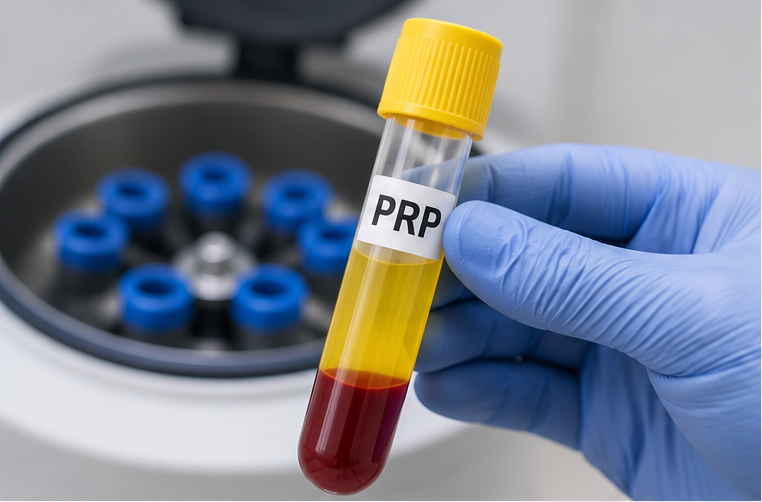
Platelet-rich plasma has moved from professional sports medicine into ordinary clinics, and many people with a sore knee or a stubborn tendon injury are now offered it as an option. The first practical thing most of them ask is what it will cost, because the answer is rarely on a price list.
PRP pricing is unusual in medicine. Insurance generally does not pay for it, so there is no negotiated rate, and clinics set their own fees. Quotes for what sounds like the same treatment can differ by a factor of three or more.
This guide explains PRP injection cost in realistic terms: typical price ranges, what drives the differences, where insurance stands, and how to judge whether a quote is reasonable.
Quick answer: A PRP injection typically costs between $500 and $2,500 per treatment in the United States, and most patients pay out of pocket because insurance rarely covers it. The price depends on the body area, the preparation system, whether imaging guidance is used, and how many sessions are recommended.
Key Takeaways
- Published estimates put PRP at roughly $500 to $2,500 per treatment.
- Most insurance plans, including Medicare, do not cover PRP for joint or tendon problems.
- Total cost depends heavily on the number of sessions, which ranges from one to three for most conditions.
- A higher price does not indicate a better result. Preparation methods vary and are not standardized.
- Evidence is strongest for mild to moderate knee osteoarthritis and chronic tendon injuries.
How much does PRP cost per injection?
PRP usually costs between $500 and $2,500 per injection in the United States. Academic medical centers have published prices near the lower end of that range, while some private clinics charge considerably more. Because fees are not regulated or standardized, the same treatment can be priced very differently between practices in the same city.
A review of PRP economics in a peer-reviewed orthopedic journal reported that PRP is not covered by most insurance and that the out-of-pocket cost is roughly $500 to $2,500 per treatment, with patients often receiving more than one.
For a concrete reference point, Johns Hopkins Medicine lists its cost per injection at $750 to $850, depending on the injection site, and notes that one injection may be enough while some patients need two or three.
Those two figures frame the market well. A quote under $1,000 per injection sits within the range charged by major teaching hospitals. A quote of several thousand dollars per injection deserves questions about what is included.
What affects the price of a PRP injection?
The price of a PRP injection is affected by the body area treated, the equipment used to prepare the plasma, whether ultrasound guidance is used, the training of the clinician, the number of sessions planned, and local operating costs. Package pricing and bundled follow-up visits also change the total.
The main cost drivers:
- Treatment area. A knee joint is a straightforward target. Tendons, small joints, and deeper structures can take more time and precision.
- Preparation system. Clinics use different commercial kits and centrifuges. Kit costs vary, and so does the platelet concentration they produce.
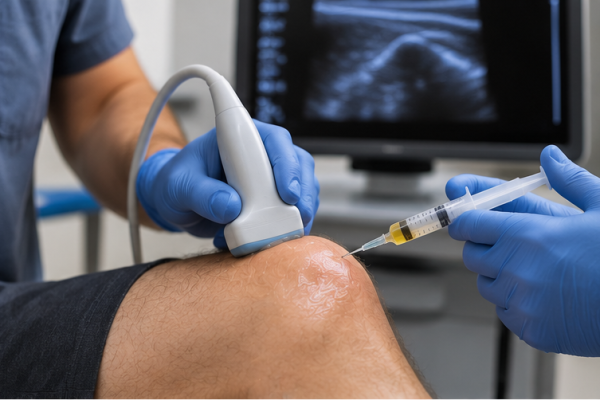
- Imaging guidance. Ultrasound helps place the injection accurately, especially for tendons. It adds equipment and time.
- Number of injections per session. Treating both knees costs more than treating one.
- Number of sessions. A series of three is priced very differently from a single treatment.
- What the fee includes. Some quotes cover the consultation, the blood draw, the procedure, and a follow-up visit. Others bill each separately.
- Location. Rent, staffing, and local demand all influence fees, and Miami is a comparatively high-cost market for elective procedures.
The American Academy of Orthopaedic Surgeons explains that PRP is prepared by drawing blood and concentrating the platelets to 5 to 10 times the usual level. No single preparation method is standard, which is part of why both prices and study results vary.
Does insurance cover PRP?
Insurance generally does not cover PRP for joint pain, arthritis, or tendon injuries. Most private insurers classify it as investigational for these uses. Medicare covers PRP only for chronic non-healing diabetic wounds. Patients should expect to pay the full cost themselves and should confirm this with their plan beforehand.
The orthopedic academy’s patient guidance states plainly that few insurance plans provide even partial reimbursement.
Medicare’s position is specific. Its national coverage determination for blood-derived products covers autologous PRP for chronic non-healing diabetic wounds for a duration of 20 weeks. Musculoskeletal uses such as knee arthritis are not included.
Some points that help with planning:
- Ask for a written quote. It should state the per-session fee, what it includes, and the expected number of sessions.
- Check HSA and FSA rules. Many plans allow these funds to be used for medically recommended treatment. Confirm with your plan administrator.
- Ask about the consultation. An evaluation visit to decide whether PRP is appropriate may be billed to insurance as a regular office visit, even though the procedure is not.
- Be cautious with financing. Medical credit products can carry high deferred interest.
Tricord Medical Group’s PRP page notes that cost depends on the area treated and the number of sessions recommended, and that pricing is explained at the consultation.

Schedule Your Primary Care Visit Today!
If you’re due for a checkup or need trusted medical care, we’re here to help. Call (305) 274-8779 or book your appointment online today with Tricord Medical in Miami.
How many PRP injections are needed, and what is the total cost?
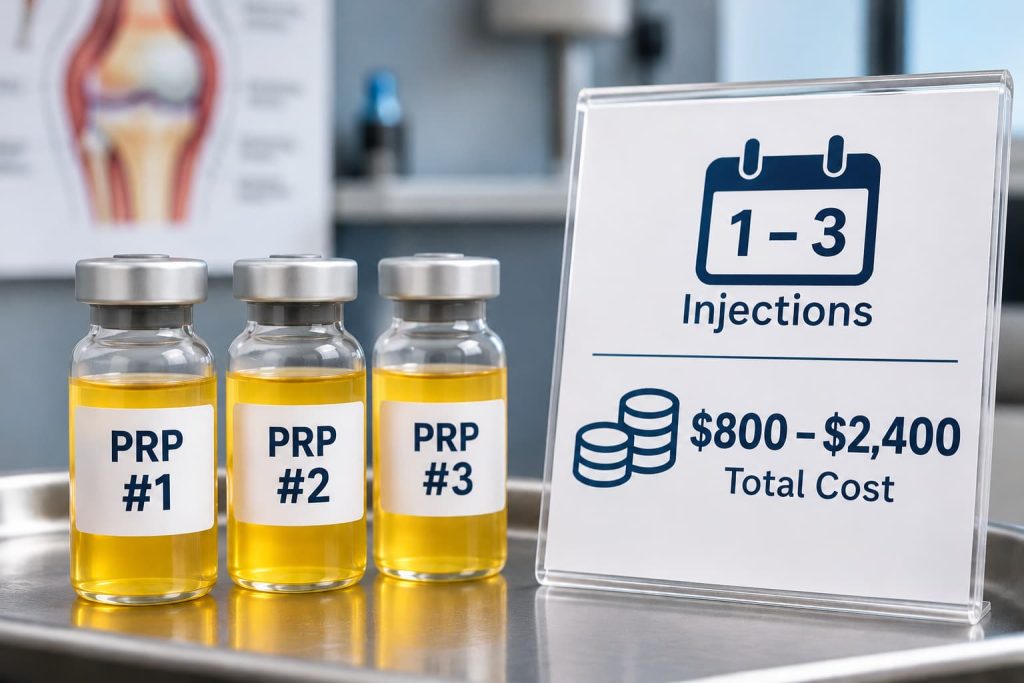
Most treatment plans involve one to three PRP injections, spaced several weeks apart. The total cost is the per-session fee multiplied by the number of sessions, so a three-injection series at $800 each comes to $2,400. The number needed depends on the condition and on how a patient responds.
There is no universal protocol. Some clinicians plan a single injection and reassess after six to eight weeks. Others schedule a series from the start, particularly for knee osteoarthritis.
Questions to settle before committing:
- Is the plan one injection with reassessment, or a fixed series?
- If the first injection brings no improvement, will the series continue?
- Is there a package price, and is it refundable if treatment stops early?
- How will results be measured?
Relief, when it occurs, is not permanent. For knee osteoarthritis, the orthopedic academy notes that results may last up to two years in some patients. Others notice benefit for a shorter period or not at all, and repeat treatment adds to the long-term cost.
How does PRP injection knee treatment compare with other options?
For knee osteoarthritis, PRP costs more out of pocket than the usual alternatives because those alternatives are typically covered by insurance. Physical therapy, anti-inflammatory medication, and corticosteroid injections are standard first steps. PRP is generally considered after these, for mild to moderate arthritis that has not responded well enough.
How the options compare in general terms:
- Exercise and physical therapy. Usually covered by insurance, with strong evidence for knee osteoarthritis. This is the foundation of treatment.
- Weight management. No procedure cost, and it reduces load on the joint.
- Oral or topical anti-inflammatory medication. Low cost, useful for flares, with limits on long-term use.
- Corticosteroid injection. Usually covered. Relief tends to last weeks to a few months.
- PRP injection. Usually not covered. Evidence suggests benefit for some patients with mild to moderate arthritis.
- Knee replacement. Covered when criteria are met. Reserved for advanced arthritis.
Cost matters, but so does fit. PRP is not a substitute for strengthening the muscles around the knee, and it is unlikely to help a joint with severe, bone-on-bone arthritis.
Is PRP worth the cost?
Whether PRP is worth the cost depends on the condition being treated. Evidence is most promising for chronic tendon injuries such as tennis elbow and for mild to moderate knee osteoarthritis. Evidence is limited for many other uses. Results vary between patients, and no clinic can guarantee an outcome.
The orthopedic academy’s assessment is measured. It describes PRP as most promising for chronic tendon injuries and knee osteoarthritis and notes that research supporting many widely advertised uses is lacking.
PRP is more likely to be a reasonable choice when:
- The diagnosis is one where studies show benefit
- Standard treatments have been tried properly and were not enough
- The clinician explains realistic expectations and alternatives
- The cost will not cause financial strain
It is a poor choice when:
- It is offered before any basic treatment has been attempted
- The clinic promises a cure or regrowth of cartilage
- Pressure is applied to prepay for a large package
- The arthritis is advanced
Risks are low because the injection uses your own blood. Soreness at the injection site for a day or two is common. Infection and nerve injury are rare and occur at rates similar to other joint injections.
What should you ask before paying for PRP?
Before paying for PRP, ask what diagnosis is being treated, what evidence supports PRP for it, how many sessions are planned, exactly what the fee includes, and what happens if there is no improvement. Also ask who performs the injection and whether imaging guidance is used.
A useful checklist for a consultation:
- What is my specific diagnosis, and how was it confirmed?
- What other treatments should I try first, or alongside this?
- How many injections do you recommend, and why?
- What is the total cost, in writing?
- Does the fee include the consultation and follow-up?
- Who performs the procedure, and how often do they do it?
- What results do your patients with my condition typically see?
- What should I avoid before and after, including anti-inflammatory medication?
Clear, unhurried answers are a good sign. Vague answers about evidence or price are a reason to get a second opinion.
Tricord Medical Group offers PRP injections in Miami as an in-office procedure for conditions including knee osteoarthritis and tendon injuries. A consultation covers whether PRP suits your condition and what it would cost.
Final Thoughts
PRP is a self-pay treatment with a wide price range and uneven evidence. The realistic national range is about $500 to $2,500 per treatment, the number of sessions determines the total, and insurance is unlikely to contribute.
The most valuable step is not finding the lowest price. It is confirming that your diagnosis is one PRP has been shown to help, and that simpler covered treatments have had a fair trial.
To discuss whether PRP is appropriate for your joint or tendon pain, contact Tricord Medical Group in Miami at (305) 274-8779 or schedule a consultation online.
Frequently Asked Questions
Why is PRP so expensive?
PRP is expensive mainly because insurance does not cover it, so patients pay the full fee. The cost reflects single-use preparation kits, centrifuge equipment, clinician time, and sometimes ultrasound guidance. With no insurer-negotiated rates, clinics set their own prices, which leads to wide variation.
Does Medicare pay for PRP injections for knee arthritis?
Medicare does not pay for PRP injections for knee arthritis. Its national coverage policy limits PRP to the treatment of chronic non-healing diabetic wounds. Patients with Medicare who choose PRP for joint or tendon conditions should expect to pay the full cost and may be asked to sign a notice acknowledging this.
Is a more expensive PRP injection more effective?
A more expensive PRP injection is not necessarily more effective. Price reflects a clinic’s costs and market, not proven results. Preparation methods differ in platelet concentration and composition, and research has not identified one clearly superior formula. The accuracy of the diagnosis and injection matters more than the fee.
Can you use an HSA or FSA to pay for PRP?
Health savings accounts and flexible spending accounts can often be used for PRP when it is recommended by a clinician to treat a medical condition. Rules differ by plan, and cosmetic uses are generally excluded. Confirm eligibility with your plan administrator and keep an itemized receipt.
How long do PRP results last?
PRP results vary. For mild to moderate knee osteoarthritis, some patients report improvement lasting from several months up to about two years. Others notice little change. Relief is not permanent, and the underlying arthritis continues. Repeat treatment may be offered if the first course was helpful.
Why Preventative Primary Care in Miami Matters
Preventative primary care helps you stay ahead of illness with regular checkups and early detection.
Book an Appointment
Schedule an appointment with our trusted Miami primary care doctors