



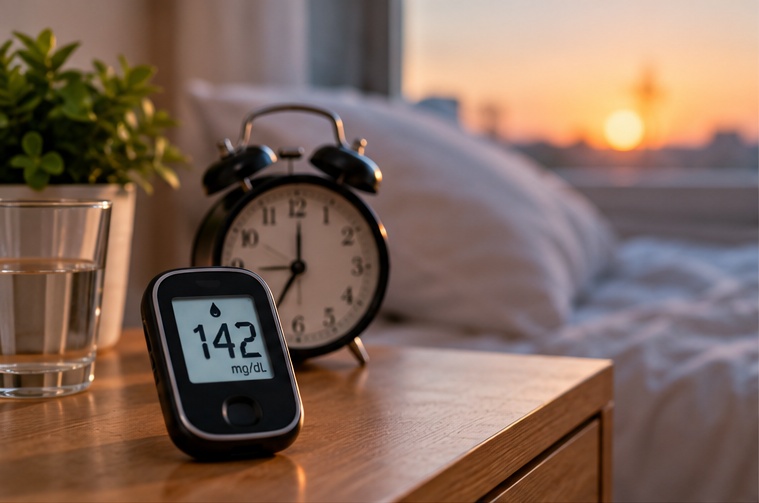
You ate a sensible dinner, skipped dessert, and went to bed on time. Then the meter or sensor shows a higher number at 7 a.m. than it did before you fell asleep. For many people with diabetes or prediabetes, this is one of the most frustrating patterns to see.
It is also one of the most common, and it usually has a clear physiological explanation. Nothing you ate overnight caused it, because you ate nothing.
If you have been asking “why is my blood sugar high in the morning,” this guide covers the three main causes, the numbers to compare against, and the steps that help bring fasting readings down.
Quick answer: Morning blood sugar is usually high because of the dawn phenomenon, a natural early morning release of cortisol and growth hormone that prompts the liver to release glucose. Other causes include diabetes medication wearing off overnight and, less often, a rebound after low blood sugar during sleep. Late evening carbohydrates can add to the rise.
Key Takeaways
- The dawn phenomenon raises glucose between roughly 3 a.m. and 8 a.m. and affects about half of people with diabetes.
- A normal fasting reading is 99 mg/dL or below; 100 to 125 mg/dL falls in the prediabetes range.
- Checking glucose at bedtime, around 3 a.m., and on waking helps identify which cause applies.
- Medication timing, evening meals, and activity are the main adjustable factors.
- Never change insulin or medication doses without talking to your clinician.
What is the Dawn Phenomenon?
The dawn phenomenon is an early morning rise in blood sugar caused by hormones the body releases before waking. Cortisol, growth hormone, and related hormones signal the liver to release stored glucose and make cells temporarily less responsive to insulin. In people with diabetes, the body cannot fully offset that rise, so fasting readings climb.
The American Diabetes Association explains that this surge raises glucose between approximately 3 and 8 a.m. and that about half of people with type 1 or type 2 diabetes experience it. Mayo Clinic places the window between 4 a.m. and 8 a.m.
This hormone release happens in everyone. It is part of how the body prepares for the day, making energy available before breakfast.
In a person without diabetes, the pancreas responds with a small extra amount of insulin and the reading stays flat. With diabetes or significant insulin resistance, that compensating response is missing or too weak. The same hormonal signal then shows up as a number on the meter.
What other causes make blood sugar high in the morning?
Besides the dawn phenomenon, high morning blood sugar can come from waning insulin, where diabetes medication stops working before morning, and from the Somogyi effect, a rebound after an overnight low. Bedtime snacks high in carbohydrates, illness, poor sleep, and stress can also push fasting readings higher than expected.
Waning insulin. If the long-acting insulin dose is too low, or an insulin pump delivers too little background insulin overnight, glucose drifts upward through the night. The same can happen when an evening oral medication does not last until morning.
The Somogyi effect. The ADA describes this as the body’s response to low blood glucose during the night. A missed dinner or too much evening insulin drops glucose, and stress hormones then drive it back up. Researchers debate how often this truly occurs, and it appears to be much less common than the dawn phenomenon.
Evening food and drink. A large or late dinner, or a carbohydrate-heavy snack at bedtime, can still be raising glucose hours later. Alcohol complicates the picture because it can lower glucose overnight in people on insulin or certain medications.
Sleep and stress. Short or broken sleep and untreated sleep apnea are associated with higher fasting glucose. Illness and infection raise it too.
What are normal fasting blood sugar levels?
A normal fasting blood sugar level is 99 mg/dL or below. Readings from 100 to 125 mg/dL indicate prediabetes, and 126 mg/dL or higher on two separate tests indicates diabetes. For many adults already diagnosed with diabetes, a common fasting target is 80 to 130 mg/dL, although individual goals differ.
Those diagnostic ranges come from the CDC’s diabetes testing guidance. “Fasting” means no food or caloric drinks for at least eight hours, which is why the first reading of the day carries so much weight.
Here is how to read normal blood sugar in the morning against those ranges:
- 99 mg/dL or below: normal fasting level
- 100 to 125 mg/dL: prediabetes range
- 126 mg/dL or above: diabetes range when confirmed by repeat testing
- 80 to 130 mg/dL: typical target for many adults being treated for diabetes
A single high reading is not a diagnosis. Home meters have a margin of error, and one poor night of sleep can shift a result. A pattern across several mornings is what matters.
If your fasting numbers sit in the prediabetes range and you have never been tested, an A1C test gives a three-month average. Our guide to insulin resistance signs and symptoms covers the earlier stage of this process.

Schedule Your Primary Care Visit Today!
If you’re due for a checkup or need trusted medical care, we’re here to help. Call (305) 274-8779 or book your appointment online today with Tricord Medical in Miami.
How can you tell which cause is behind your morning readings?
You can identify the cause by checking glucose at bedtime, around 3 a.m., and on waking for several nights. A normal 3 a.m. reading followed by a high morning reading suggests the dawn phenomenon. A steadily rising overnight trend suggests waning insulin, and a low 3 a.m. reading suggests a rebound.
The three patterns look like this:
- Dawn phenomenon: steady overnight, then a climb in the hours before waking.
- Waning insulin: gradual increase from bedtime through morning.
- Somogyi effect: a dip into low territory in the middle of the night, then a high waking number.
A continuous glucose monitor makes this far easier, since it records the whole night without waking you. If you use fingersticks, a few nights of 3 a.m. checks are enough to show the trend.
Write down what you ate for dinner, any snack, when you took medication, and whether you exercised. Bring that log to your appointment. It turns a vague complaint into something your clinician can act on.

How do you lower high morning blood sugar?
Lowering high morning blood sugar depends on the cause. Common approaches include limiting carbohydrates in the evening, adding physical activity after dinner or in the morning, improving sleep, and having a clinician adjust the type, dose, or timing of diabetes medication. Medication changes should always be made with medical guidance.
Steps that often help, according to the ADA and Mayo Clinic:
- Shift evening carbohydrates. Eat dinner earlier and keep bedtime snacks low in carbohydrates. Mayo Clinic notes that doctors may advise avoiding carbohydrates at bedtime.
- Move after dinner. A walk in the evening can lower overnight glucose, and morning activity helps blunt the dawn rise.
- Review medication timing. Moving a dose from dinner to bedtime, changing medications, or adjusting basal insulin are options your clinician may consider.
- Protect your sleep. Aim for a consistent schedule and mention loud snoring or daytime sleepiness, since sleep apnea is treatable.
- Eat breakfast. A balanced morning meal with protein helps signal the body to wind down the overnight hormone surge.
What not to do: skip dinner to force a lower number, or increase insulin on your own. Both can cause overnight lows, which are more dangerous than a moderately high morning reading.
When should you see a doctor about high morning blood sugar?
See a doctor if fasting readings are repeatedly above your target range, if morning numbers are consistently 100 mg/dL or higher and you have not been diagnosed with diabetes, or if you experience overnight low blood sugar symptoms such as night sweats, nightmares, or waking with a headache. Persistent patterns usually need a treatment adjustment.
High fasting glucose matters because it lifts your overall average. Over time, a higher A1C raises the risk of complications affecting the eyes, kidneys, nerves, and heart.
Seek same-day care if a high reading comes with intense thirst, frequent urination, nausea, vomiting, or confusion. Readings that stay above 300 mg/dL deserve prompt medical attention.
At Tricord Medical Group, diabetes care and management in Miami includes reviewing glucose logs and adjusting treatment plans, and in-office blood tests and lab work make it simple to check an A1C.

Final Thoughts
A high number first thing in the morning is rarely about willpower. In most cases, hormones released before dawn are doing what they are designed to do, and the body’s insulin response is not keeping pace.
The useful next step is to find your pattern. A few nights of bedtime, 3 a.m., and waking readings will usually show whether the cause is the dawn phenomenon, medication wearing off, or an overnight low.
If your fasting readings are running high, the team at Tricord Medical Group in Miami can review your numbers and adjust your plan. Call (305) 274-8779 or schedule a visit online.
Can people without diabetes have high blood sugar in the morning?
Can people without diabetes have high blood sugar in the morning?
People without diabetes experience the same early morning hormone release, but a healthy pancreas produces enough insulin to keep glucose in the normal range. A fasting reading that is repeatedly 100 mg/dL or higher in someone without a diagnosis may indicate prediabetes and is a reason to request formal testing.
Does eating a bedtime snack help or hurt morning blood sugar?
It depends on the cause. A carbohydrate-heavy bedtime snack usually raises morning readings. For someone whose glucose drops too low overnight, a small snack with protein may prevent a rebound high. Testing at bedtime and at 3 a.m. shows which situation applies before changing evening eating habits.
How long does the dawn phenomenon last each morning?
The dawn phenomenon typically affects glucose between about 3 a.m. and 8 a.m. Readings often settle later in the morning as the hormone surge fades, particularly after breakfast and some physical activity. In people with less insulin production, the elevated level can persist longer and may need medication adjustment.
Does poor sleep raise fasting blood sugar?
Poor sleep can raise fasting blood sugar. Short sleep and interrupted sleep increase stress hormones and reduce insulin sensitivity the following day. Untreated obstructive sleep apnea is strongly associated with higher glucose levels. Improving sleep duration and treating sleep disorders often produces measurable improvement in morning readings.
Is high morning blood sugar dangerous?
An occasional high morning reading is not dangerous. Consistently elevated fasting glucose raises average blood sugar and A1C, which increases long-term risk of nerve, kidney, eye, and heart complications. Very high readings accompanied by vomiting, extreme thirst, or confusion require urgent medical care because they can indicate a serious problem.
Why Preventative Primary Care in Miami Matters
Preventative primary care helps you stay ahead of illness with regular checkups and early detection.
Book an Appointment
Schedule an appointment with our trusted Miami primary care doctors